

Bowel cancer develops from polyps and often takes 10 years or more to become cancerous. Therefore, early and appropriate screening can be very effective in prevention. The multi-target stool gene test, newly introduced in Hong Kong, has the highest accuracy among non-invasive screening methods and is simple and convenient, as it only requires collecting a stool sample at home.
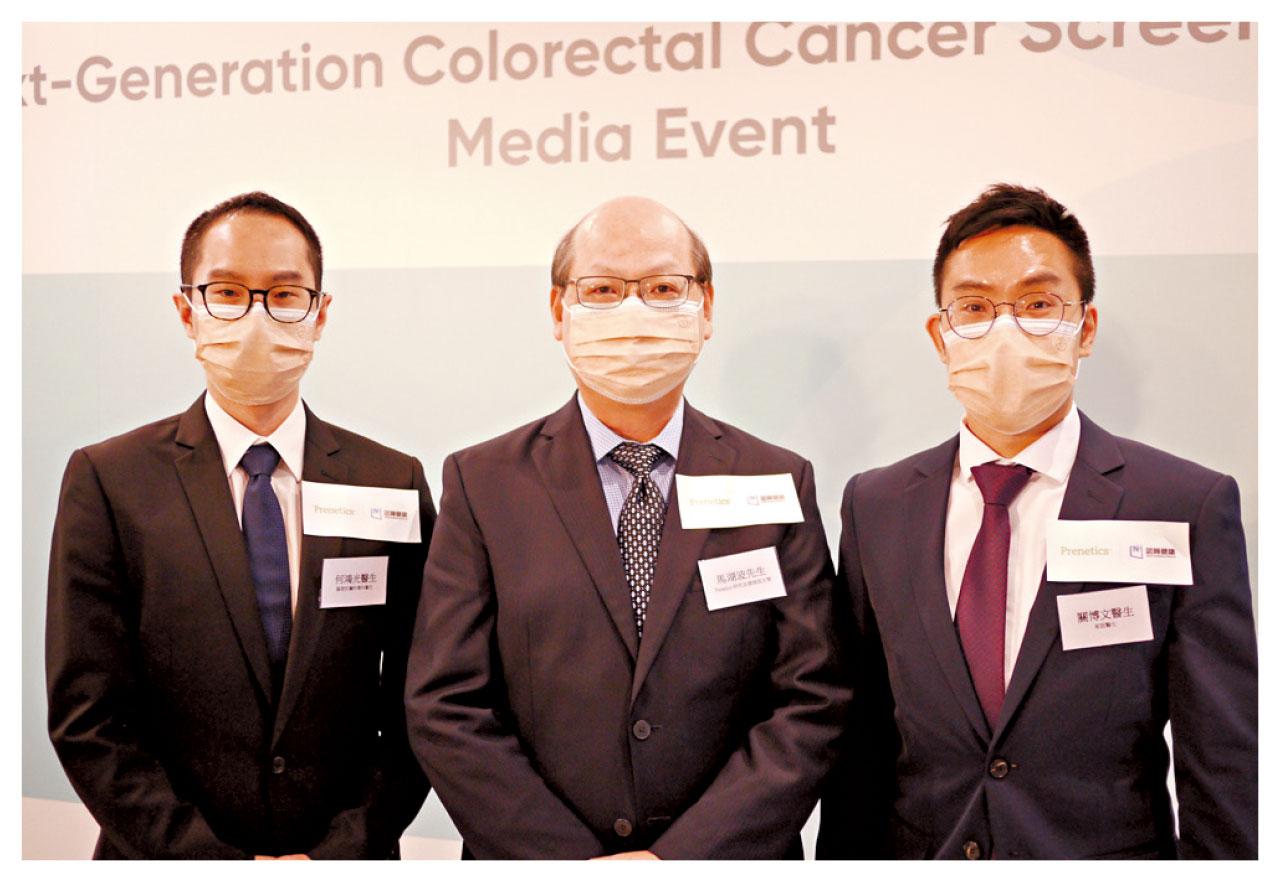
Half of patients are diagnosed with stage III or higher colorectal cancer, and data indicate that the five-year survival rate is only 67% or lower.Ho Hung-kwong, a specialist in gastroenterology and hepatology, explains that this is because early-stage colorectal cancer may not present any symptoms. “If symptoms do occur, the most common include changes in bowel habits, blood in the stools, narrower stools, abdominal pain, weight loss and anaemia.It is worth noting that smoking, alcohol consumption, obesity, lack of exercise, a diet low in fibre, and high consumption of red meat and processed meat are all risk factors, and these conditions are very common in Hong Kong.”
Incorporate genetic testing technology
Currently, common colorectal cancer screening methods include faecal occult blood testing and colonoscopy. Although the former is convenient, its sensitivity for small adenomas and precancerous lesions is low. Colonoscopy, on the other hand, is the gold standard for diagnosis and allows for the simultaneous removal of polyps during the procedure. However, it requires a low-residue diet beforehand and the use of laxatives to clear the bowel. The latest multi-target stool gene testing introduced in Hong Kong adds gene testing to faecal occult blood testing. Dr. Ma Hu-bo, Head of Research and Development at Prenetics, pointed out, "During the process of colorectal cancer development, mutated DNA within cells is constantly shed into the faeces. By detecting blood and mutated DNA in faeces, it can serve as an effective tool for non-invasive colorectal cancer screening."
95% sensitivity
A clinical study involving 4,758 participants found that multi-target faecal genetic testing achieved sensitivities of 95.5% and 63.5% for colorectal cancer and advanced adenomas (precancerous lesions) respectively, making it the most accurate non-invasive screening method;Furthermore, the negative predictive value for colorectal cancer was 99.6%, meaning that false negatives are extremely rare, thereby effectively preventing missed diagnoses.
Dr. Kwan Pok-man, a family doctor, added, "The demand for remote healthcare has risen during the pandemic, and non-urgent procedures like colonoscopies may also be delayed. Multi-target faecal gene testing is suitable for citizens to screen for bowel cancer at this time. Those in need can consult a doctor about whether this screening method is suitable for them." Users can then obtain the test kit from clinics or by post. After collecting a faecal sample at home, they send it back to the laboratory, with results available in 5 working days. A negative result means it can be repeated every 2 to 3 years. A positive result indicates the possibility of bowel cancer, advanced adenoma, or benign tumours, and they should seek medical attention for follow-up as soon as possible.
In the past three years, entertainer Alex Fong has undergone two colonoscopies. This was due to his irregular work and dining schedule, which caused him to be concerned about his bowel health. Fortunately, the results were all normal, and he had no polyps. Recently, he also tried a multi-target stool gene test and found the testing process to be much more convenient. Further colonoscopy examinations are only required if the test result is positive and after consulting with a doctor.
In the past three years, entertainer Alex Fong has undergone two colonoscopies. This was due to his irregular work and dining schedule, which caused him to be concerned about his bowel health. Fortunately, the results were all normal, and he had no polyps. Recently, he also tried a multi-target stool gene test and found the testing process to be much more convenient. Further colonoscopy examinations are only required if the test result is positive and after consulting with a doctor.

1. After lining the toilet with the collection pad included in the packaging and defecating, put on gloves before collecting the sample.
2. Use the faecal occult blood test stick to collect a thumb-sized sample. Place the stick into sample pot A for a faecal occult blood test.
3. Using the tool provided with sample pot B, collect 5 faecal samples from different locations for genetic testing.
4. Tighten cap on sample bottle B, pack all samples, and then post them to complete.
1. After lining the toilet with the collection pad included in the packaging and defecating, put on gloves before collecting the sample.
2. Use the faecal occult blood test stick to collect a thumb-sized sample. Place the stick into sample pot A for a faecal occult blood test.
3. Using the tool provided with sample pot B, collect 5 faecal samples from different locations for genetic testing.
4. Tighten cap on sample bottle B, pack all samples, and then post them to complete.
Source: AM730 (9 June 2022)
https://bit.ly/3SkP13L